Smile for the Algorithm: What AI Video Screening Really Sees—And How to Navigate It
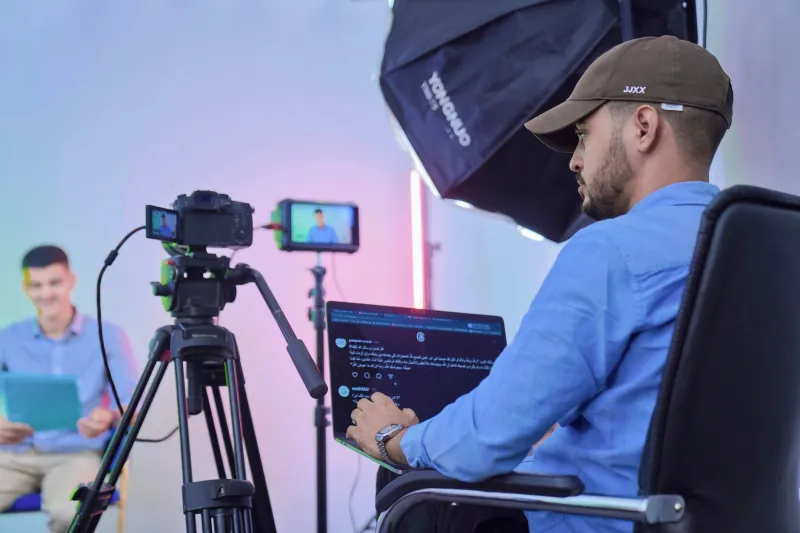
You rehearsed your answers. You dressed professionally. You spoke clearly and confidently. And yet, somewhere between your closing remarks and the hiring manager's inbox, an algorithm decided you weren't the right fit.
For a growing number of job seekers across the United States, this scenario is no longer hypothetical. AI-powered video interview platforms—tools like HireVue, Spark Hire, and Vervoe—are now embedded in the hiring pipelines of some of the country's largest employers. These systems don't just record your responses; they actively analyze them. Facial muscle movements, vocal pitch variation, word choice, speaking pace, and even the pauses between sentences are all processed and scored. The result is a candidate profile built not by a human recruiter, but by a machine trained on patterns from previous hires.
The implications for job seekers are significant—and not entirely reassuring.
How AI Interview Screening Actually Works
At its core, AI video screening attempts to predict job performance by identifying behavioral signals that correlate with success in a given role. Vendors typically train their models on data from existing employees—measuring everything from the frequency of positive language to the consistency of eye contact—and then use those patterns to rank new candidates.
Some platforms go further, assigning numerical scores to personality traits such as conscientiousness, emotional stability, or communication clarity. These scores are then surfaced to recruiters as a shortlist, often before a human ever watches a single second of footage.
The appeal to employers is obvious. For high-volume roles, manually reviewing hundreds of recorded interviews is neither practical nor cost-effective. AI screening promises speed, consistency, and—in theory—objectivity.
But objectivity is precisely where things get complicated.
The Bias Hidden in the Training Data
Algorithms learn from the data they are fed. If an AI model is trained predominantly on employees who were hired and retained under a particular management culture, in a specific era, or from a narrow demographic pool, the resulting system may inadvertently encode those biases into its scoring criteria.
Researchers at MIT and Georgetown University have separately documented cases where facial analysis tools performed with measurably lower accuracy for darker-skinned individuals and women. While not all AI interview platforms rely on facial recognition in the same way, the underlying concern—that historical hiring patterns can be laundered through algorithmic processes and presented as neutral data—remains a legitimate and largely unresolved issue.
In 2023, New York City enacted Local Law 144, requiring employers using AI hiring tools to conduct independent bias audits and disclose their use to candidates. It was the first legislation of its kind in the country. Several other states are currently considering similar measures, but for most American job seekers, transparency remains limited.
What This Means for Your Job Search
Knowing that an AI system may be evaluating you changes how you should approach the interview—not by coaching you to perform inauthentically, but by helping you present yourself with deliberate clarity.
Understand the environment before you begin. If a company uses a third-party video screening platform, that information is often publicly available through their careers page or Glassdoor reviews. Knowing which tool is in use can help you understand what signals the system may be prioritizing.
Optimize your technical setup, not your personality. Many AI systems penalize candidates not for what they say, but for poor audio quality, inconsistent lighting, or a cluttered background—factors that can distort the data the algorithm collects. A neutral background, a well-positioned camera at eye level, and a quiet room with good lighting are baseline requirements, not optional upgrades.
Speak in complete, structured thoughts. AI language analysis tends to reward coherence and sentence completion. Long pauses, fragmented sentences, or frequent filler words such as "um" and "like" can register as signals the system weighs negatively. Practicing your responses aloud—not to memorize scripts, but to build fluency—is a practical preparation step.
Maintain natural eye contact with the camera. Because many systems track gaze direction as a proxy for engagement or confidence, looking directly at the camera lens (rather than at your own image on screen) reads as sustained eye contact to the algorithm.
The Authenticity Paradox
There is a genuine tension at the heart of preparing for AI-screened interviews. If you adjust your behavior too deliberately to satisfy an algorithm, you risk presenting a version of yourself that doesn't reflect who you actually are—and that mismatch can surface later in the hiring process or after you've accepted an offer.
The more productive framing is this: the same qualities that make you a strong communicator in any professional context—clarity, composure, structured thinking—are also the qualities that tend to perform well in AI-evaluated environments. Preparation, in this sense, is not about gaming the system. It is about removing unnecessary friction between your authentic self and the medium through which you are being assessed.
Tools like Resuma AI can play a meaningful role in that preparation. By helping you analyze the language and priorities embedded in a job description before you ever sit down in front of a camera, AI-powered career platforms allow you to align your framing and vocabulary with what the role genuinely demands—so that when the algorithm listens, it hears the signal it was designed to find.
Advocating for a Fairer Process
Preparation is necessary, but it is not sufficient. Job seekers also have a legitimate interest in knowing when and how AI tools are being used in their evaluation—and in pushing back when those tools produce outcomes that appear inconsistent or unexplained.
If you are rejected following an AI-screened interview with no feedback, it is reasonable to ask the recruiter whether automated screening was part of the process. You are unlikely to receive a detailed technical explanation, but the question itself signals awareness and contributes, in a small way, to the broader accountability conversation that employers and regulators are only beginning to have.
The algorithm may be making the first cut. But the decision about whether to accept a job—and whether a company's hiring practices reflect values you want to be part of—still belongs to you.